
It is very rare to use pure gold. Jewellers and refiners mix it with other metals to improve strength, color, and durability. This process of mixing metals with gold is called alloying gold. It affects the purity of gold, its value, and its usage.
In this article, you will learn what a gold alloy is, how the karat system measures the purity of gold, and how metals in an alloy change its colour and strength. You will also learn about the different types of gold alloys.
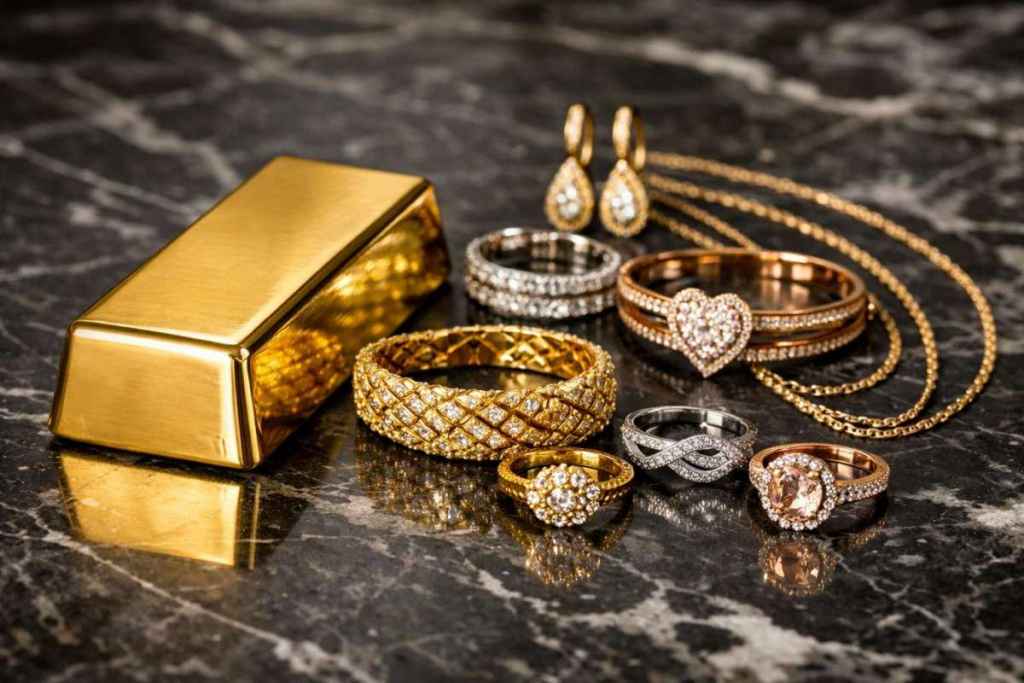
What is a Gold Alloy?
Gold alloy is a mixture of gold and other metals. Pure 24K gold contains almost no additives, but it bends and scratches easily. Jewellers mix gold with metals like copper or silver to improve durability and hardness. This metal mixture makes gold strong enough for daily wear while keeping its beauty and value.
Pure gold feels soft and can lose shape over time. Alloy gold holds its form and resists damage. That is why most jewellery uses alloy gold instead of pure gold.
Think of it like mixing cement with sand and gravel. Cement alone is weak, but the mixture creates strong concrete. In the same way, mixing metals with gold creates a stronger and more practical material.
Why Pure Gold is Mixed with Other Metals
Pure gold is very soft and bends easily, making it unsuitable for most jewellery or daily-use items. Mixing it with other metals creates gold alloys that are stronger and more practical. Here are the main benefits:
- Increased Strength: Alloyed gold can withstand bending and impact better than pure gold.
- Scratch Resistance: Adding metals like copper or nickel makes gold less prone to scratches.
- Improved Durability: Gold alloys last longer and maintain their shape over time.
- Better Workability: Jewellers can shape and design alloy gold more easily than pure gold.
- Variety of Colors: Mixing metals produces yellow, white, rose, or green gold for different styles.
Understanding Gold Purity with Karat System
Gold purity shows how much pure gold is present in an item compared to other metals. The karat (K) system measures this, with 24K being nearly pure gold. Lower karat numbers mean more metals are mixed in, which increases strength but slightly reduces purity. Jewellery and investment products use different karats depending on durability, appearance, and purpose.
Here is a table of gold purity levels:
| Karat | Gold % | Alloy % | Common Use |
| 24K | 99.9% | minimal | investment bars |
| 22K | 91.6% | small mix | jewellery |
| 18K | 75% | higher mix | premium jewellery |
| 14K | 58.5% | durable mix | everyday jewellery |
| 10K | 41.7% | strong mix | budget jewellery |
This gold purity chart helps you quickly understand which karat suits your needs, whether for investment, gift, or daily wear. You can verify gold fineness and authenticity by checking hallmarks on items.
Common Metals Used in Gold Alloys
Jewelers mix gold with other metals to improve strength, color, and durability. Each metal adds unique properties to the alloy:
- Copper: Adds strength and produces a reddish or rose tint in gold.
- Silver: Lightens the gold color and improves malleability for shaping.
- Nickel: Increases hardness and creates white gold alloys.
- Zinc: Enhances workability and prevents oxidation in the alloy.
- Palladium: Produces white gold without nickel and resists tarnishing.
Types of Gold Alloys by Color
The color of gold changes depending on the metals mixed with it. Pure gold is naturally yellow, but alloying it with copper, silver, nickel, or palladium creates different shades. These color variations affect jewellery’s appearance, durability, and style. Understanding the different types helps you pick the right gold for your needs.
Yellow Gold Alloy
Yellow gold is the most familiar and traditional gold color. It is made by mixing pure gold with small amounts of copper and silver. The copper adds strength, while silver keeps the yellow tone bright.
Yellow gold is soft enough to craft detailed designs but still strong enough for rings, necklaces, and bracelets. Its classic appearance makes it the most popular choice for wedding and everyday jewellery.
A simple gold wedding band usually uses 22K yellow gold because it balances softness and durability.
White Gold Alloy
Jewelers mix pure gold with metals like palladium or nickel to create white gold with a silvery tone. Jewelers coat most white gold jewellery with rhodium to brighten it and increase scratch resistance.
White gold offers the look of platinum but costs less and can be shaped into intricate designs easily. Jewelers often choose it for rings, bracelets, and modern jewellery collections.
Pros and Cons:
- Pros:
- Has a bright, modern look similar to platinum
- Stronger and more durable than pure gold
- Rhodium coating adds scratch resistance
- Cons:
- Rhodium plating wears off over time and may need reapplication
- Nickel-based white gold can cause allergic reactions for some people
Always check the rhodium coating when buying white gold jewellery for daily wear.
Rose Gold Alloy
Rose gold gets its pink or reddish color from a higher copper content in the alloy. This gives it a warm, romantic tone. It is slightly stronger than pure gold, which makes it suitable for rings and bracelets that get frequent use.
Rose gold is especially popular in vintage jewellery styles and engagement rings. Its unique color stands out compared to yellow or white gold.
An 18K rose gold ring usually contains about 75% pure gold and 25% copper, giving it the soft pink tone while remaining durable.
How Gold Alloys Affect Durability and Strength
Not all gold is equally strong. The karat level and metals mixed with gold affect its hardness, wear resistance, and overall longevity. Pure 24K gold is very soft and scratches easily, so it is mostly used for investment bars rather than jewellery. 22K gold is slightly stronger, but it can still bend or scratch with daily wear, making it better for occasional-use rings or necklaces
18K gold offers a good balance between purity and strength, resisting scratches while keeping a rich gold color, which makes it ideal for premium jewellery like engagement rings. Lower karats, such as 14K and 10K, are much more durable due to higher alloy content. These are perfect for jewellery that sees daily use, like bracelets, watches, or rings, as they maintain their shape and color over time.
When choosing gold for jewellery, consider how often the piece will be worn and how much strength it needs. Higher karat gold works well for investment or special-occasion items, while lower karat gold provides scratch resistance and long-term durability for everyday wear. Checking the alloy metals used can also improve hardness and prevent early damage, ensuring your jewellery lasts for years while keeping its appearance intact.
Which Gold Alloy is Best for Jewellery?
The choice of gold alloy depends on how often the jewellery will be worn and its purpose. 18K gold has a rich color and enough strength for engagement rings, pendants, or pieces worn occasionally. It combines purity with durability, so it resists scratches better than pure 24K gold while keeping a warm yellow tone.
14K gold contains more alloy metals, which increases hardness and scratch resistance. It suits rings, bracelets, and jewellery worn every day. Its lighter color remains attractive and withstands frequent wear.
Recommendations and Use-Cases:
- Engagement Rings & Pendants: 18K gold for a luxurious and elegant look.
- Daily Wear Rings & Bracelets: 14K gold for durability and long-lasting shape.
- Special Occasion Jewellery: 18K gold for pieces worn carefully but with a strong presence.
- Children’s Jewellery or Active Use Pieces: 14K gold to resist scratches and damage.
Which Gold Alloy is Best for Investment?
For investment purposes, 24K gold is the preferred choice because it is nearly pure and holds the highest market value. Jewellery alloys like 18K or 14K contain other metals, which can reduce resale value and liquidity. Investors usually focus on gold bars or gold coins because they are easy to buy, sell, and store, and their purity is guaranteed.
Gold Alloys vs Solid Gold: Value Comparison
The value of gold depends on purity and composition. Solid 24K gold has the highest melt value and resale value because it contains nearly no other metals. Gold alloys, such as 18K or 14K, are less pure, which slightly lowers their market price. Understanding the differences helps buyers and investors make informed choices between jewellery and bullion.
Comparison Table: Gold Alloys vs Solid Gold
| Type | Purity | Melt Value | Resale Value | Common Use |
| 24K Solid Gold | 99.9% | Highest | Highest | Investment bars, coins |
| 22K Alloy Gold | 91.6% | High | High | Traditional jewellery |
| 18K Alloy Gold | 75% | Medium | Medium | Premium jewellery |
| 14K Alloy Gold | 58.5% | Lower | Lower | Daily wear jewellery |
| 10K Alloy Gold | 41.7% | Lowest | Lowest | Budget jewellery |
How to Identify Gold Purity and Alloys
Knowing the purity of gold helps you make smart buying decisions. The easiest way to check gold purity is by looking for a hallmark stamp on the jewellery. Numbers like 24K, 18K, or 14K indicate the gold content, while symbols from an assay office confirm authenticity.
Gold is not magnetic, so you can use a magnet test to spot fake pieces or metals mixed in. Another method is the acid test, where a small drop of testing acid on a discreet area shows the karat by the reaction. You can take gold to a jeweller or certified lab to verify its purity accurately.
When testing gold, always choose discreet areas to avoid damage. Buying from reputable sellers who provide hallmarks or certificates ensures authenticity. Keeping records of hallmarks and test results helps with future resale or investment. Using these simple methods allows you to confidently identify the composition of gold alloys and make informed purchases.
Common Myths About Gold Alloys
Many people have misunderstandings about gold alloys, which can affect buying decisions. Here are some common gold alloy myths and the facts that clarify them:
- Myth: White gold is fake gold.
Fact: White gold is real gold mixed with metals like palladium or nickel. It is coated with rhodium for a silver-like finish. - Myth: 24K gold is the best choice for jewellery.
Fact: Pure 24K gold is very soft and scratches easily. Alloys like 18K or 14K are stronger and more suitable for everyday jewellery. - Myth: All gold alloys look the same.
Fact: Different metals create yellow, white, rose, and green gold. Each has a distinct color and appearance. - Myth: Alloy gold has no value compared to pure gold.
Fact: Gold alloys still contain a high percentage of gold and retain resale value, though slightly lower than 24K. - Myth: You cannot wear alloy gold daily.
Fact: Lower karat gold, like 14K or 10K, is highly durable and ideal for daily wear.
Pros and Cons of Gold Alloys
Gold alloys have advantages and disadvantages depending on their composition and use. Understanding them helps you choose the right type for jewellery or investment.
Pros
- Stronger than pure gold, resists bending and scratches
- Available in multiple colors: yellow, white, rose, and green
- Suitable for daily wear due to improved durability
- Easier for jewellers to shape into intricate designs
- Retains significant resale value
Cons
- Lower purity than 24K, slightly reducing the melt value
- Some alloys, like nickel-based white gold, can cause allergic reactions
- Color may fade or change over time without proper care
- Not as soft or luxurious as pure gold for special-occasion pieces
- Requires rhodium plating in white gold for brightness, which may need reapplication
Buying Tips: Choosing the Right Gold Alloy
Selecting the right gold alloy depends on your budget, lifestyle, and long-term goals. Use this checklist to make informed decisions when buying gold jewellery:
- Determine the purpose: Decide if the piece is for daily wear, special occasions, or investment.
- Choose the appropriate karat: Higher karats like 18K give a richer color, while 14K or 10K provide extra durability.
- Consider daily activities: If you are active, select a harder alloy to resist scratches and bending.
- Check the color preference: Yellow, white, or rose gold should match your style and skin tone.
- Set a budget: Higher karat gold costs more; lower karats are more affordable but still valuable.
- Look for hallmarks and certification: Ensure the gold is genuine and the purity is guaranteed.
- Think long-term: Choose alloys that maintain value and shape over time for better resale or inheritance potential.
- Inspect workmanship: Quality craftsmanship reduces the risk of damage and extends the jewellery’s life.
FAQs
Is 24K gold too soft?
Yes. Pure 24K gold is very soft and scratches easily. It is best for investment bars or coins rather than jewellery for daily wear.
Which gold karat lasts longest?
Lower karats like 14K and 10K last the longest because they contain more alloy metals, increasing durability and scratch resistance.
Does white gold tarnish?
White gold does not tarnish easily because it is usually coated with rhodium, but the coating can wear off over time and may need reapplication.
Is rose gold real gold?
Yes. Rose gold is real gold mixed with a higher copper content, which gives it a pink hue and added strength.
What gold is best for daily wear?
14K gold is ideal for daily wear. It is strong, scratch-resistant, and maintains its shape and color even with frequent use.
Which gold is best for investment?
24K gold bars or coins are best for investment because they have the highest purity, melt value, and liquidity.
Can alloy gold retain resale value?
Yes. Gold alloys like 18K and 14K still contain a high percentage of gold and hold resale value, though slightly lower than 24K.