
You keep hearing this on the news. Interest rates are going up. Or coming down. But what does that really mean for your money? And more importantly, what does it do to gold? Gold prices move all the time. Sometimes they rise when things feel uncertain. Other times, they drop when rates go up. It can feel confusing, especially if you are trying to protect your savings or think about buying gold.
In this post, you’ll see the real link between gold vs interest rates in simple words. We’ll break down how central banks change rates, how that affects the economy, and why the gold price reacts. By the end, you’ll clearly understand the interest rate impact on gold and what it means for your decisions.
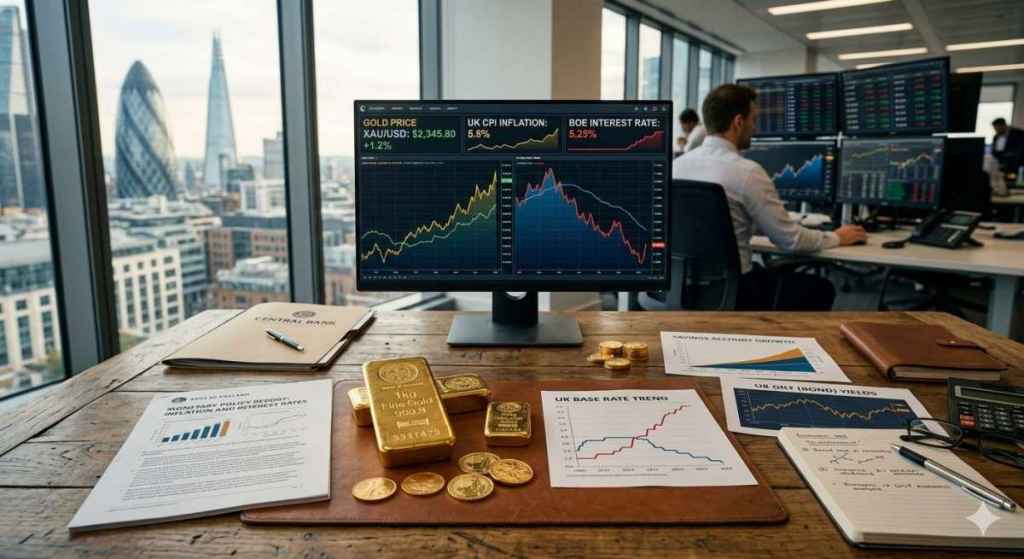
What Are Interest Rates?
Interest rates are just the cost of money. If you save money in a bank, you earn interest. If you borrow money, you pay interest. Simple. Think of it like this. You put money in a savings account. The bank gives you a small return over time. That return comes from interest rates. When rates go up, your savings earn more. When rates go down, you earn less.
Now, who decides these rates? Central banks control them. In the UK, it’s the Bank of England. In the US, it’s the Federal Reserve. They set something called the base rate. This rate guides what banks offer you. They change rates to manage the economy. If prices rise too fast, they increase rates to slow things down. If the economy feels weak, they lower rates to boost spending.
Quick idea:
- high rates = better returns on savings
- low rates = cheaper loans and borrowing
This is part of what people call monetary policy. It’s just how central banks try to keep things stable.
What Moves Gold Prices?
Gold price doesn’t move for just one reason. Interest rates matter, but they are only one part. Gold reacts to many things happening in the world at the same time. When people feel unsure about money or the economy, they often turn to gold. When confidence is strong, demand can slow down. So gold moves with emotions, money flow, and global conditions.
Here are the main factors behind gold price changes:
- Inflation – when prices go up, money loses value, and people buy more gold
- US dollar strength – when the US dollar gets strong, gold often feels expensive and demand drops
- Market demand – when more people buy gold for investment or jewellery, price rises
- Economic uncertainty – during crisis or instability, people move money into gold as a safe haven
All these factors together shape gold price trends in the market. It’s not one simple trigger. It’s a mix of global money flow, fear, and confidence in the economy.
Gold vs Interest Rates
Now this is the main idea you need to understand. The link between gold and interest rates is mostly about where people put their money. When interest rates go up, gold usually feels pressure. When rates go down, gold often gets stronger.
Here’s the simple flow:
- high interest rates → gold price often drops
- low interest rates → gold price often rises
Why this happens is not complicated. Gold does not give you any regular return. No interest, no yield, nothing monthly. You just hold it and wait for price change. But when banks or governments offer higher returns, people think twice before holding gold.
For example, savings accounts and treasury bonds start giving better returns when rates go up. That return is called yield. So people compare both options. This is where opportunity cost comes in. If you hold gold, you miss the interest you could earn from savings or bonds. So money moves away from gold when interest rates rise. And money flows back into gold when rates fall.
That is the main reason behind the gold vs interest rates relationship, and also why we see interest rate impact on gold so clearly in markets like the US and UK, especially when the Federal Reserve changes policy.
Gold vs Savings Accounts
Now let’s bring this into real life. This is where most people actually feel the difference. When you keep money in a bank, you earn interest. When you buy gold, you don’t get interest. You only gain if gold price goes up. So both behave very differently.
Here is a simple comparison:
| Feature | Gold | Savings Account |
| Returns | price growth | fixed interest |
| Risk | price fluctuation | low risk |
| Inflation protection | strong | weak |
Now think about timing. When interest rates are high, banks give better returns on savings. So people often prefer keeping money in savings accounts instead of buying gold. That’s where gold vs savings comparison becomes important. But when inflation goes up, money in the bank loses buying power. That’s where gold becomes stronger. Gold protects value better when prices rise in the economy.
So it’s a balance between bank interest and real value loss from inflation rate. When one side gets stronger, people shift money to the other side.
Gold vs Bonds
Now let’s compare gold with bonds, because both compete for the same money in the market. Bonds are basically loans you give to governments or companies. In return, they pay you regular interest. Gold works differently. It doesn’t pay anything while you hold it. You only gain if its price goes up.
That difference becomes important when interest rates change. Bonds start looking more attractive when rates rise because they offer better returns. Gold doesn’t change its return, so it can lose attention in that moment.
Here is a simple comparison:
| Feature | Gold | Bonds |
| Income | none | fixed income |
| Inflation hedge | strong | weak |
| Rate sensitivity | indirect | direct |
Bonds also connect closely with interest rates because their returns, called yields, move with market rates. When rates go up, new bonds pay more. When rates fall, old bonds become more valuable. These are usually called government bonds, and they sit in the fixed income category.
So in simple words, gold competes with bonds for investor money. When bonds offer higher income, some money moves away from gold. When bond returns drop, gold starts looking better again.
Gold as an Inflation Hedge
Now here is something important that keeps gold always in demand. Inflation means prices keep going up over time. That means your money slowly buys less than before. This is where gold comes in. Gold often holds value better when money loses strength. That’s why people call it a gold inflation hedge. It helps protect wealth when cash starts losing power.
Simple example:
If something costs 100 last year, and now it costs 110, your money value dropped. This drop in value is called loss of purchasing power. That loss is tracked through things like the CPI (Consumer Price Index). When CPI goes up, inflation is rising. When inflation rises, the value of currency weakens.
That currency value drop is where gold becomes useful. People move money into gold because it does not lose value in the same way as cash. Even if interest rates go up, inflation can still stay strong. In that situation, gold can still rise because people want protection from weak money. So gold vs inflation is not a simple one-way relationship. Rates matter, but inflation pressure often keeps gold strong in the long run.
What Happens When Central Banks Change Rates
Now let’s connect everything with real market action. This is where gold starts reacting in real time. When central banks change interest rates, gold price reacts fast. But it does not always move in a straight line. Market thinking also matters a lot. When there is a rate hike, gold usually comes under pressure. Higher rates make savings and bonds more attractive, so some money moves away from gold. This is what people mean by interest rate changes gold reaction in the market.
When there is a rate cut, the opposite happens. Lower rates reduce returns from savings, so gold becomes more attractive again. That often supports gold price.
Here is the simple pattern:
- rate hikes → gold often slows down
- rate cuts → gold often gains strength
But one more thing matters a lot: expectations.
Markets don’t wait for the actual decision. They react to what they think will happen next. So even before a move, gold price can shift based on the economic outlook. For example, if traders expect future rate cuts, gold can start rising early. If they expect more hikes, gold can stay under pressure even before any official change. So gold vs interest rates is not only about current rates. It also depends on what central banks signal about the future.
When Gold Goes Up Even With High Rates
Now here is something many people miss. Most think high interest rates always push gold down. That is not fully true. Gold does not follow only one rule. It reacts to the full situation in the economy. Sometimes gold still goes up even when rates stay high.
One big reason is inflation stays strong at the same time. So even if rates are high, money still loses value. People then move into gold for protection. Another reason is economic stress or recession. When people feel the economy is slowing down, they start worrying about safety of money. In that case, gold demand increases even if rates are not low. Also, a weak currency can push gold higher. If money value drops, gold becomes more expensive in that currency.
Simple idea:
gold doesn’t always follow interest rates in a straight way
Here are main situations where gold can rise even with high rates:
- high inflation still present
- recession fear in the economy
- weak currency value
- market uncertainty increases
In these times, gold works as a safe place. This is called safe haven demand. So gold financial trends are not only about rates. They also depend on fear, trust, and overall market behaviour during stress periods.
Gold Investment Strategy
Now let’s talk practical. If you are in the UK and thinking about gold, the main thing is not timing interest rates perfectly. That rarely works. Better idea is simple planning. First think about your goal. If you want short-term profit, gold can feel unpredictable. But if you think long-term, gold works better as steady wealth protection.
Most people do better when they don’t put everything in one place. They mix gold with savings and other assets. This reduces risk and keeps balance in money planning.
Simple approach many investors use:
- small part in gold for safety
- rest in savings for easy access
- keep long-term mindset
This is called portfolio diversification. Also don’t rely only on interest rates to decide when to buy gold. Rates move up and down, but gold works more as a long-term asset. Think of gold as long-term investment. People in the UK often use it for wealth protection, not quick trading. So gold UK investment works best when you stay steady, keep it simple, and don’t overthink short-term market moves.
Should You Buy Gold When Interest Rates Are High?
Short answer: it depends on what you want. If you are looking for quick gains, high interest rates can make gold less attractive in the short term. Because savings and bonds start giving better returns. But if your goal is long-term safety, gold can still make sense even when rates are high. It depends more on inflation and overall economic condition than just rates.
Simple way to think:
- short-term thinking → rates matter more
- long-term thinking → inflation matters more
Gold is not about perfect timing. It’s more about risk management and protecting money value over time. If you want to protect your savings from inflation and market changes, gold can be a simple option to consider. You don’t need to start big. Many people begin with small amounts and slowly build over time. You can explore physical gold options like coins and bars and choose what fits your budget and comfort level.
FAQs
How do interest rates affect gold price?
When interest rates go up, gold can slow down because savings and bonds give better returns. When rates go down, gold often gets stronger because people move money into it.
Is gold a good investment when interest rates are high?
It depends on your goal. High rates can make savings more attractive short term. But gold still works well for long-term value protection, especially when inflation stays strong.
Why does gold go up when interest rates fall?
Lower rates mean lower returns from banks and bonds. So people look for other places to keep value. Gold becomes more attractive in that situation.
Does inflation matter more than interest rates for gold?
Sometimes yes. High inflation reduces money value. In that case, gold can stay strong even if interest rates are high.
What is the best time to buy gold?
There is no perfect time. Most people buy gold slowly over time instead of trying to predict interest rate moves or market timing.
Why is gold called a safe haven asset?
Because during economic stress or uncertainty, people trust gold to hold value better than cash or risky investments.
Do central bank decisions directly control gold prices?
Not directly. But central bank interest rate changes influence savings, bonds, and inflation, which then affect gold demand and price movement.