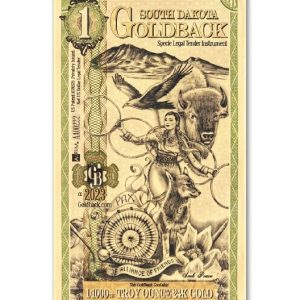
Goldbacks are getting more attention in the gold world. Many people see them online and get curious. They look like paper notes, but they actually contain real gold. That’s where most beginners get confused. People often ask simple questions. How do Goldbacks work? Can you really spend them? Are they real gold or just collectibles? And why are some investors buying them instead of normal cash or traditional bullion?
This guide will explain everything in very simple wording. You’ll learn how the Goldback system works, how Goldback transactions happen, how their value changes, and where people actually use them. We’ll also compare them with traditional gold bars, fractional gold, and other physical gold products so beginners can understand the full picture clearly.
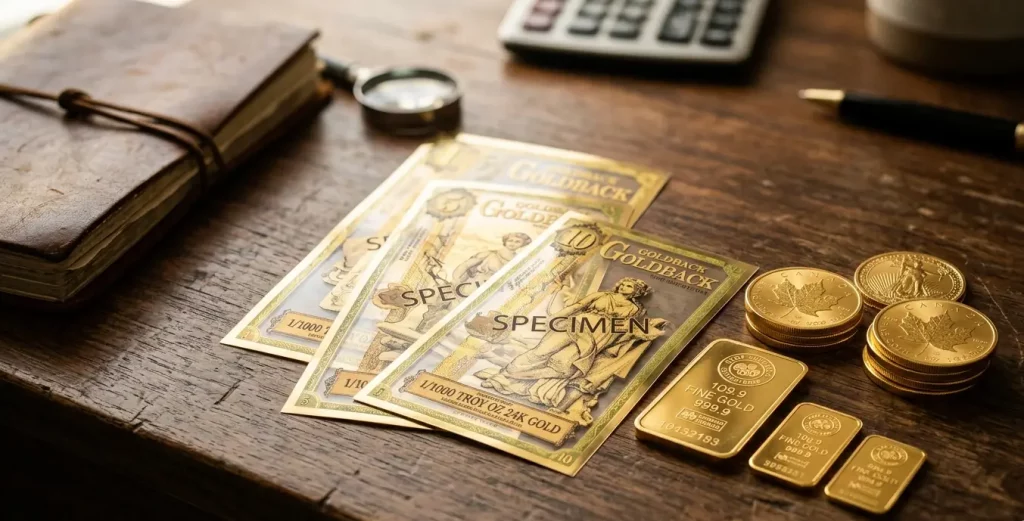
What Are Goldbacks?
Goldbacks are special money-like notes that contain real 24K gold inside them. They don’t look like normal gold at all. They look more like thin, flexible paper notes, but the value comes from real physical gold inside. The idea of Goldbacks started as a way to create spendable gold. So instead of holding gold only in bars or coins, people can hold it in small, easy-to-carry notes. Each note has a fixed amount of fractional gold built into it.
Goldbacks are not normal banknotes. They are not printed money like fiat currency. They are made using a special process where ultra-thin layers of 24K gold get sealed inside a polymer structure. This is what keeps the gold safe and visible inside the note. Each Goldback denomination carries a different amount of gold. For example, smaller notes contain tiny fractions of gold, while higher notes contain more. The value is linked to gold price, so it changes with the market.
These notes come from private production, mainly connected with companies like Goldback Inc, which helped develop and spread the concept in the US market.
Why Were Goldbacks Created?
The idea behind Goldbacks came from a simple problem. People wanted to use gold in daily life, not just store it. Gold is valuable, but it’s not easy to spend in small amounts. If you think about traditional gold coins or bars, they are heavy in value. You can’t really use them for small payments like coffee, groceries, or local shopping. That made everyday use very hard.
So the Goldback system was created as a gold-backed currency system that solves this gap. The goal was to mix real physical gold with easy handling, so people could use small amounts of gold for daily transactions without breaking or melting anything. Another reason behind this idea was inflation. Many people started worrying about fiat currency losing value over time. Gold is often seen as a way to protect purchasing power. Goldbacks became a way to carry small, usable parts of gold in a simple form.
This concept also connects with local currency thinking. In some areas, people like using alternative systems that feel more stable and tied to real assets. Goldbacks fit into that idea because they carry real gold value inside them and can support local trade in a simple way.
How Do Goldbacks Actually Work?
Goldbacks work in a very simple way, but many people get confused at first. They are not normal money and not fully official currency. They work more like a mix between physical gold and local trade notes.
Let’s break the goldback process into easy steps.
Every Goldback has a small amount of 24K gold inside it. This gold gives it real value, not just paper value.
The value of a Goldback connects directly with the global gold price. When gold price moves up or down, Goldback value also changes.
A daily exchange rate is used to understand how much one Goldback is worth in normal money. This helps buyers and sellers stay updated with real value.
Goldbacks are not forced on anyone. Businesses in a merchant network can decide if they want to accept them or not. It is fully voluntary.
If a shop accepts Goldbacks, people can use them for payment just like normal cash. It works more like barter style trade based on agreed value.
If coffee costs $7 and 1 Goldback is worth $5, then the buyer can use 1 Goldback plus $2 cash to complete the payment.
Are Goldbacks Real Gold?
Yes, Goldbacks do contain real 24K gold. This is one of the main reasons people find them interesting. It is not fake gold and not just printed design.
The gold is physically inside the note. It is placed in very thin layers and sealed inside a strong flexible material. So when you hold a Goldback, you are actually holding real physical gold in a usable form. It is also not gold-plated paper. That’s a common confusion. Gold plating means a thin coating on top, but Goldbacks are different. The gold is built inside the structure of the note, not just on the surface.
It is also not digital gold or paper representation. The value comes from real bullion-grade gold, usually around 24K purity. This makes it closer to fractional gold ownership rather than normal currency. Companies like Valaurum use special technology to create these notes. The process spreads ultra-thin layers of pure gold between protective layers. This keeps the gold safe, stable, and flexible at the same time.
So in simple words, Goldbacks are physical gold notes. You can’t melt them like a coin, but the gold inside is real and measurable like bullion.
How Are Goldbacks Different From Normal Money?
Goldbacks and normal money work in very different ways. This is where most beginners get confused. At first, they may look similar, but their value system is not the same at all. Goldbacks have real physical gold inside them. That means they carry actual intrinsic value. Even if no one accepted them, the gold inside still has worth because it connects to real bullion.
Normal money, also called fiat currency, does not contain any gold or physical asset. It only works because a central bank and government say it has value. Its worth depends on trust in the system, not a physical backing. Another big difference is inflation. Fiat currency loses purchasing power over time when prices go up. Gold-backed currency like Goldbacks moves with gold price, which people often use as a long-term store of value.
Goldbacks are also not controlled by a central bank. They are a private currency system used voluntarily by people and businesses. Normal money is fully controlled and issued by governments.
Here is a simple comparison table:
| Goldbacks | Regular Money |
| Contains real gold | Paper or digital currency |
| Physical asset inside | No physical backing |
| Value linked to gold price | Value controlled by central banks |
| Private currency system | Government-issued fiat currency |
Can You Really Spend Goldbacks?
Yes, you can spend Goldbacks, but only in places where businesses agree to accept them. They are not accepted everywhere like normal money.
Goldback transactions depend on a merchant network. This means a group of local businesses that choose to accept them as payment. It is completely voluntary, no one forces shops to take them. Right now, Goldbacks are mostly used in certain US states. They are still not common in the UK or most other countries. So for UK readers, it’s important to understand that Goldbacks are not a global payment system.
Where can you use Goldbacks?
You can use Goldbacks in some local businesses that accept them. These may include:
- small restaurants or cafés
- local service shops
- retail stores in the merchant network
- community-based businesses
It works more like barter style transactions, where value is agreed between buyer and seller.
What can you buy with Goldbacks?
In places where they are accepted, people may use Goldbacks for:
- food and drinks
- small services
- local shopping
- everyday small payments
But again, it depends fully on the business. If they don’t accept Goldbacks, you cannot use them there.
Important thing to understand
Goldbacks are not like card payments or cash that works everywhere. You cannot walk into any shop and expect them to accept it.
In simple terms, Goldbacks are more like an optional payment system used by a small network of businesses, mostly in the US. Outside that system, they are mainly used as collectible or gold-based assets rather than daily money.
How Is Goldback Value Calculated?
Goldback value is not fixed. It changes with the gold market. This is why people often check the goldback exchange rate before buying or selling. The main factor is the gold spot price. When global gold price moves up or down, Goldback value usually follows the same direction. So if gold becomes expensive, Goldbacks also become more valuable.
But it’s not only gold price. There are other things involved too. Production cost, special printing process, security layers, and distribution all add extra cost. That’s why Goldbacks often trade above their actual melt value. This extra cost is called a premium. It is normal in fractional gold products like small bars or collectible bullion. So Goldbacks are not just raw gold value, they also include design and manufacturing value.
Pros and Cons of Goldbacks
Goldbacks have some clear advantages, but also some real limits. It’s important to see both sides so beginners understand properly.
Pros of Goldbacks
- real physical gold inside each note
- easy to carry compared to coins or bars
- works in small fractions of gold
- can be used for simple everyday payments in some places
- popular among collectors because of design and rarity
- value can move with gold price, so it links with inflation trends
Cons of Goldbacks
- not accepted everywhere, very limited use
- higher premiums compared to normal gold bullion
- not common in the UK or most countries
- not official government money or legal tender
- depends on merchant acceptance, not universal system
- more useful as collectible or niche asset than daily currency
Are Goldbacks a Good Investment?
Goldbacks investment depends a lot on what you want from your money. They are not a simple “buy and forget” investment like some people expect from bullion investment. If your goal is pure gold exposure at the lowest cost, then traditional gold market products like bars or coins usually work better. They often come with lower premiums and are more widely accepted for resale.
Goldbacks make more sense in different situations. Some people see them as collectible gold. Some treat them like a small form of fractional gold investing. Others like them as an alternative currency idea linked with inflation hedge thinking. So it’s better to see Goldbacks as a mix of things, not a pure investment product. They sit between collectible value and small physical gold ownership. That’s why they attract a different type of buyer compared to standard bullion.
In simple terms, Goldbacks are interesting, but not the strongest option if your only goal is maximum investment efficiency.
Final Thoughts
Goldbacks are a simple idea but still a bit unusual for many people. They combine physical gold with a currency-style design, which makes them different from normal money and standard bullion products.
For beginners, the main idea is easy. Goldbacks are real gold in small usable form. They also work like a mix of collectible item and alternative payment concept. This is why people find them interesting in the first place.
If you are exploring how goldbacks work, it helps to also understand regular gold investing. You can look into gold bars, fractional gold, and other physical gold products to see what fits your goal better.
FAQs
Do Goldbacks contain real gold?
Yes. Goldbacks contain real 24K gold inside each note. The gold is physically built into the material, not printed or plated.
Can Goldbacks be spent anywhere?
No. Goldbacks can only be used where businesses choose to accept them. They are not accepted everywhere like normal cash.
Are Goldbacks legal tender?
No. Goldbacks are not official legal tender. They are legal to own and use, but acceptance is voluntary between people and businesses.
How is Goldback value calculated?
Goldback value follows the gold spot price and daily exchange rate. Production costs and premiums also affect the final price.
Are Goldbacks good for investment?
It depends on your goal. They are better seen as collectible gold or small fractional gold, not the cheapest bullion investment option.
What countries use Goldbacks?
Goldbacks are mainly used in the United States. They are not widely used in the UK or most other countries.
Are Goldbacks better than gold coins?
Not really better, just different. Gold coins are usually better for pure investment, while Goldbacks are more for small gold ownership and collectible use.