Coins may look simple. A small round piece of metal with a design on it. But a lot happens before that coin reaches your hand.
Every coin starts inside a mint. Machines strike metal blanks using engraved tools called coin dies. During this process you may see a number on some coins. Many people notice it but do not know what it means. If you collect coins this small number can matter more than you think. It can help identify different coin varieties. It also shows how the coin minting process produces a coin.
Here you will learn what a die number is and why mints use it. You will also see how coins are made, how coin dies work, and where they place die numbers on coins. We will also look at the difference between die numbers and mint marks, why collectors care about them and how they connect with coin collecting and numismatics.
By the end you will understand a small detail many people ignore, but collectors watch closely. This knowledge can also help when looking at collectible coins or studying rare coins.
What is a Die Number in Coins?
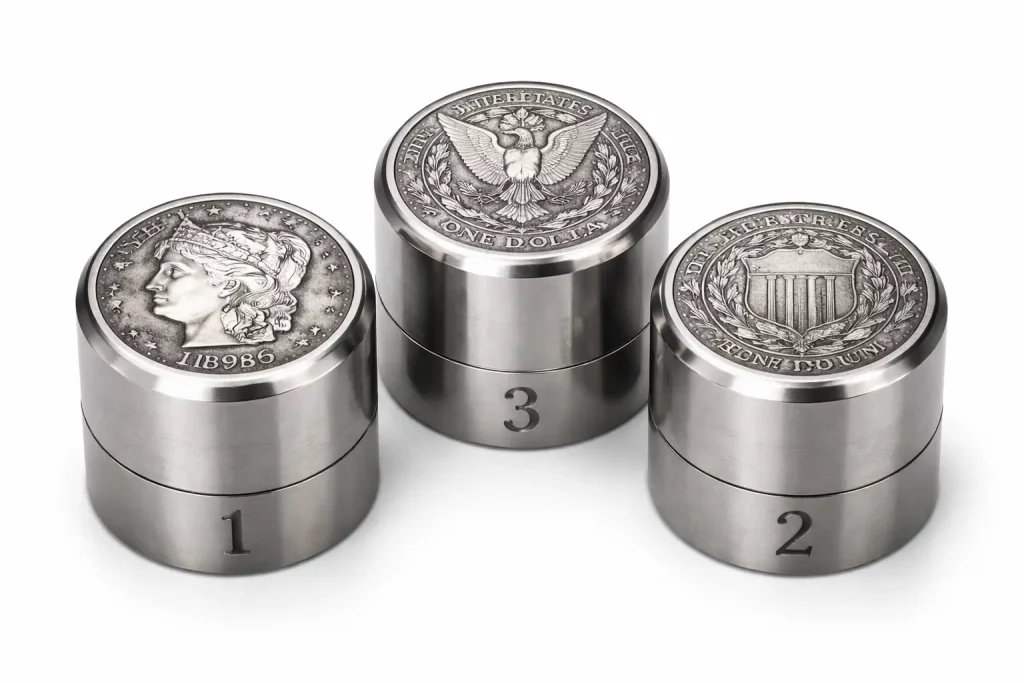
A die number is a small number linked to the tool that makes a coin. This tool is called a coin die, and it carries the engraved design that stamps the image onto metal. Mints sometimes add a number to a die to track it during coin minting.
Coins are made by pressing a round metal blank, called a planchet, between two dies. One die forms the front (obverse) and the other forms the back (reverse). The dies strike the planchet with strong pressure, pushing the design into the metal. Each die may have its own number so the mint can track which tool produced which coins.
The design on the die is engraved in reverse. When it presses into the planchet, the image flips and appears correctly on the coin. Collectors often study die numbers because a specific die can create small design differences. These differences help spot coin varieties and understand the minting process in more detail.
Why Die Numbers Were Used on Coins
Mints started using die numbers to manage large scale coin production. A mint may use many coin dies during one production run. Each die slowly wears out after striking thousands of coins. Die numbers helped mint workers know which die produced which group of coins.
This system helped with quality control. If workers spotted a design problem on coins, they could trace it back to the exact die. The mint could then remove that die and replace it before more faulty coins entered circulation. This made mint production more controlled and reliable.
The Royal Mint used die numbers on several British coins during the 19th century. These numbers helped officials study how different dies performed during coin minting. They could test how long a die lasted and see when a die started losing sharp detail.
Where Can You Find Die Numbers on a Coin?
Die number location depends on the coin type and its coin design. Mints usually place the number in a small area where it does not affect the main artwork. On many British coins, the number sits close to the date or near small design details. Collectors often need a magnifying glass to spot it clearly during coin identification.
Here are some common places where die numbers appeared on older British coins, especially on Victorian coins.
| Coin type | Location of die number |
|---|---|
| Penny | below the date |
| Halfpenny | near the lighthouse |
| Sixpence | above the date |
| Florin | below the portrait |
For example, on a British penny the number usually appears under the year. On a halfpenny, the number may sit close to the lighthouse design on the reverse side. Small details like this help collectors study coins more closely.
How Coins Are Minted
Coins start as simple metal pieces, but making them takes several careful steps. Understanding the coin minting process helps collectors and investors see how coins get their designs and value. Each coin goes through machines and skilled work at the mint factory before it reaches people.
Here is how coins are made step by step:
- Design stage – Artists draw the coin design, including portraits, numbers, and symbols.
- Master model creation – A large model of the coin is made to guide the engraving.
- Die engraving – Skilled workers engrave the design into a coin die, often in reverse.
- Blank creation – Round metal blanks called planchets are cut from sheets of metal.
- Coin striking – The planchet goes into a coin press. High striking pressure presses the design from the dies onto the blank.
- Quality inspection – Finished coins are checked for errors or defects before leaving the mint.
This process ensures that each coin is strong, detailed, and ready for circulation or collecting. Every step is important for coin production and the final look of the coin.
Die Numbers vs Mint Marks
Many beginners mix up die numbers and mint marks. Both appear on coins, but they tell different things. Die numbers show which coin die made the coin. Mint marks show which mint produced it. Knowing the difference helps with coin identification and studying coin terminology.
Here is a simple comparison:
| Feature | Die Number | Mint Mark |
|---|---|---|
| Purpose | Identify specific die | Identify mint location |
| Example | 1, 2, 3 | S, P, D |
| Meaning | Tracks production | Shows mint facility |
For example, a coin may have die number 2 from a London mint marked “S”. The mint mark letters tell collectors where it came from, while the die number helps trace which die made it. Both details are useful for collectors and investors studying coins.
Do Die Numbers Make Coins Rare?
Sometimes collectors look for coins made with specific die numbers. These coins may show small differences in design. Collectors call these die varieties, and they can make a coin more interesting to study.
However, a die number alone does not always make a coin rare. Coin rarity depends on several things. How many coins were made (mintage numbers), the coin’s condition, and how many collectors want it all affect its value.
Many die numbers do not increase the coin value much. Still, they attract collector attention and can make coins more desirable for a collectible coins collection. Knowing about die numbers helps investors understand which coins may be more interesting or valuable.
Die Errors and Coin Varieties
Sometimes coins come out with small mistakes. These are called coin errors, and collectors often find them very interesting. Errors happen when a coin die has a problem or wears out. These mistakes create rare coin varieties that can be valuable or just fun to collect.
Common types of die errors include:
- Doubled die – the design appears twice slightly offset.
- Die crack – small lines appear where the die has cracked.
- Die chip – tiny metal pieces break off the die and leave a mark on the coin.
- Worn die – the die loses sharpness, making the design look soft or blurry.
These defects show how the coin was made and give collectors unique coins to study. Many error coins become sought-after because no two are exactly the same.
Why Coin Collectors Care About Die Numbers
Coin collectors pay attention to die numbers because they help spot different coin varieties. Even small changes in a die can create unique details on coins. These details are important for coin collecting and make some coins more interesting than others.
Numismatists use die numbers in research. They study how coins were made, compare coins from different mints, and track changes over time. This helps create accurate coin catalogues and records for collectors and investors.
Some collectors try to gather coins from every die. They build die number sets to complete a collection. This makes collecting more organized and gives extra value to collectible coins that show unique characteristics from their dies.
Die Numbers in Gold and Silver Bullion Coins
Most bullion coins are bought for their metal, like gold coins or silver coins. People usually focus on the weight and purity, not the small details on the coin.
But some special bullion issues become collectible. Limited runs, proofs, or commemorative coins may attract collectors. These coins sometimes show small differences, including die numbers, that make them more interesting.
For example, gold sovereigns, silver proof coins, and other commemorative bullion coins from the Royal Mint can show unique die details. Investors and collectors watch these closely because the combination of metal value and collectible features can make the coin more desirable.
Quick Coin Terminology Guide
Here are some basic coin terminology every collector or investor should know. This simple coin collecting guide helps understand coins faster.
| Term | Meaning |
|---|---|
| Die | Tool that stamps the coin design |
| Planchet | Blank metal disc ready for striking |
| Mint mark | Letter showing which mint made the coin |
| Mintage | Number of coins produced |
| Strike | Pressure used to create the coin |
Knowing these terms makes it easier to study coins, spot varieties, and understand numismatics. For example, the planchet and strike reveal how the coin was made, while the mint mark and mintage indicate its rarity.
Final Thoughts
Die numbers are a small but important part of coin history. They tell the story of how coins were made and help collectors study different coin varieties.
Understanding the minting process and die details makes it easier for buyers and collectors to choose collectible coins. This coin guide shows that even tiny numbers can add value and interest to a coin collection.
FAQs
What is a die number on a coin?
A die number is a small number linked to the tool (coin die) that makes a coin. It helps track production and sometimes shows minor design differences.
Do die numbers increase coin value?
Not always. Most die numbers do not change coin value, but collectors may pay extra for certain die varieties or rare numbers.
Where is a die number located?
The die number location depends on the coin type. On British coins, it may appear below the date, near a design element, or above the date on smaller coins.
What is the difference between die number and mint mark?
A die number shows which die struck the coin. A mint mark shows which mint produced it. Both help with coin identification, but they serve different purposes.
How are coins minted?
Coins are made by pressing metal blanks (planchets) between engraved coin dies under high pressure. The process includes designing, engraving dies, creating blanks, striking, and inspecting the coins for quality.