Most people think old coins are valuable. That’s not always true. Some coins look old but have little value, while others look normal and sell for high prices. This is where many people get confused and make wrong buying decisions. In the UK coin market, value does not depend on age alone. Collectors, rarity, and the type of coin all play a role. There is also a big difference between bullion and numismatic coins, and many beginners don’t understand this part clearly.
In this guide, you will learn how to identify valuable coins in the UK in a simple way. We will break down rare coins value, show what really matters, and give you easy checks you can use yourself. By the end, you will know which coins are just old and which ones are actually worth money.
What Actually Makes a Coin Valuable?
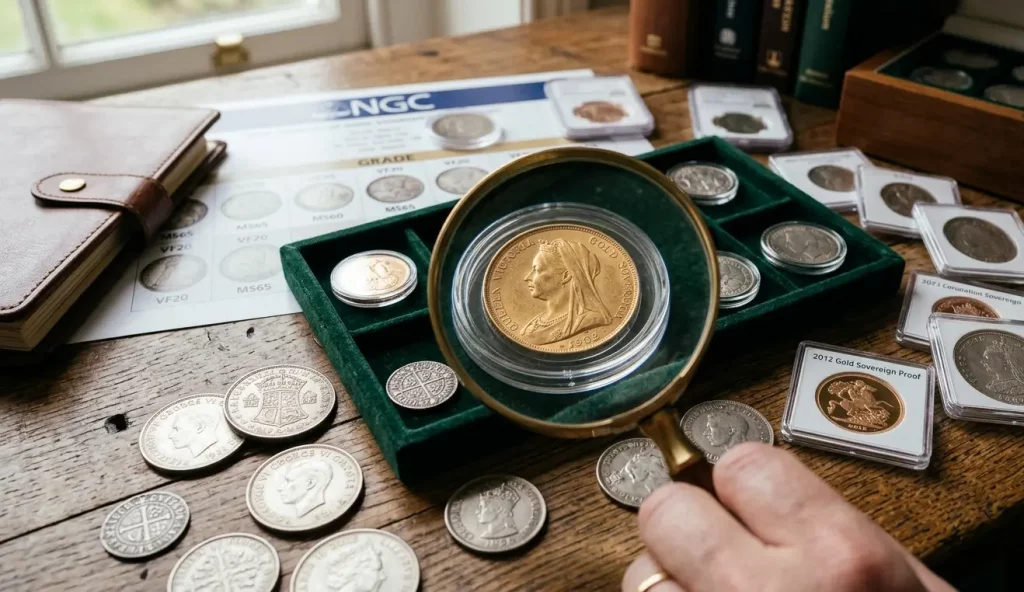
A coin does not become valuable just because it looks old. Real value comes from a few simple things. Once you understand these, rare coins value becomes much easier to judge.
Here are the 4 main factors:
- Rarity (how many coins exist)
If only a small number of coins were made, the coin becomes rare. Fewer coins in the market usually means higher value. This is a key part of any coin rarity guide. - Demand (how many people want it)
A coin must be wanted. If collectors look for it, the price goes up. If no one cares, even a rare coin can stay cheap. This works on simple supply and demand. - Condition (how clean the coin is)
Condition matters a lot. A clean coin with less damage sells for more. Scratches, wear, and marks lower the price. This is where coin grading comes in. - Metal value (gold or silver content)
If the coin is made of gold or silver, it already has a base value. This comes from its gold content or silver content. Even if it is not rare, it still holds metal value.
One important thing to understand:
Bullion coins and rare coins are not the same.
- Bullion coins depend on metal price
- Rare coins depend on numismatic value (rarity, demand, condition)
If you mix these two, you can easily misunderstand a coin’s real worth.
Rare Coins vs Gold & Silver Bullion
People often mix rare coins with bullion coins. But both work in very different ways. If you understand this, coin investment rare decisions become much clearer.
Simple Comparison
| Feature | Rare Coins | Bullion Coins |
| Value base | Rarity, demand, condition | Gold or silver price |
| Price stability | Can change a lot | More stable |
| Investment type | Collectible focus | Metal investment focus |
| Liquidity | Depends on buyer interest | Easier to sell in bullion market |
How value works
Rare coins value depends on how special the coin is. Things like low mintage, collector demand, and condition decide the price. That’s why rare gold coins can sell for very different prices even if they look similar. Bullion coins work in a simpler way. Their value mostly follows gold coins UK or silver prices. If metal price goes up, coin value also goes up. If metal drops, value drops too.
Price stability
Rare coins do not stay stable. One collector may pay high price, another may not care at all. So price can change depending on collectors market interest. Bullion coins stay more stable. They follow bullion market rates. That makes them easier to track and understand for beginners.
Investment style
Rare coins are more like collectibles. People buy them for history, design, and rarity. It is not just metal, it is also story and demand. Bullion coins are simple investment coins. People buy them to store gold or silver value long term.
Selling (liquidity)
Bullion coins are easier to sell because price is clear and linked to metal value. Dealers and investors trade them daily. Rare coins depend on finding the right buyer. If demand is low, selling can take time.
How to Identify a Valuable Coin
A lot of people get confused when they see an old coin. But you can check value in a very simple way. Just follow these steps one by one.
Check the year
Start with the year on the coin. Some years had low production, so coins from those years can be more valuable. This is your first basic step in how to identify valuable coins.
Look for mint mark
Mint mark shows where the coin was made. Small letters or symbols on the coin tell this. Some mint marks are rare, and collectors pay more for them.
Check for design errors
Sometimes coins have small mistakes. These are called coin errors. It can be double print, wrong text, or small design shift. These mistakes can increase value a lot in coin collecting tips.
Check metal type
See if the coin is gold, silver, or base metal. Gold and silver coins already have basic value. This helps you understand the starting price before rarity.
Check condition
Look closely at the coin surface. Scratches, fading, or damage reduce value. Clean coins with shine usually score better in grading scale.
Research mintage numbers
Mintage means how many coins were made that year. Low mintage often means higher rarity. This is a key part of any coin rarity guide.
Coin Condition (Grading) – Why It Changes Price
Coin grading means checking how good or bad the condition of a coin is. Same coin can have very different prices just because of condition. This is one of the biggest reasons rare coins value changes. Even small scratches or wear can lower the price. Collectors always prefer better condition coins, so grading becomes very important in valuable coins UK market.
Simple grading table
| Grade | Meaning | Value impact |
| Poor | Heavy damage, hard to read details | Very low value |
| Fine | Clear but worn details | Low to medium value |
| Extremely Fine | Light wear, good details | High value |
| Uncirculated | No wear, like new coin | Highest value |
Why grading changes price
Same coin can sell for different prices based on condition. A worn coin may only get metal value. But a clean coin in uncirculated state can get much higher price. This is why coin grading is very important in collectors standards. Buyers always check condition first before making any offer.
Valuable Coins in the UK
Some coins in the UK become valuable because of rarity, history, or demand from collectors. Here are simple examples so you understand what actually matters in real market.
- Rare gold coins
Some gold coins become rare because they were made in small numbers. These coins usually carry strong value because of gold content and collector demand. Rare gold coins are always active in UK market. - Old sovereigns
Gold sovereign coins are very popular in UK coin history. Older versions, especially from certain years, can be more valuable. People often collect them for both gold value and history. - Error coins
Some coins leave mint with small mistakes. These can be wrong design, double strike, or printing issues. These coin errors are rare and collectors pay extra for them. - Limited edition coins
Royal Mint sometimes releases coins in limited mintage. When supply is low and demand is high, these coins become part of valuable coin list in collectors market.
Where to Check a Coin’s Value
If you want to know real rare coins value, don’t guess. Always check proper sources. Coin prices change depending on demand and market price, so research matters a lot.
Here are simple places where you can check value:
- Online marketplaces
Websites like eBay or collector platforms show real buying and selling prices. You can see what people actually pay, not just asking price. - Coin dealer websites (like bullion dealers)
Trusted coin dealers UK often show live prices for gold and silver coins. These sites help you understand real coin value based on market price. - Auction results
Auction houses give strong real data. When collectors bid on coins, final price shows true demand. This is one of the most reliable ways to study rare coin market. - Price guides
Price guides show estimated values based on condition and rarity. They are not exact, but useful for quick idea and coin value checker reference.
Are Rare Coins a Good Investment?
Rare coins can be a good investment, but not for everyone. It depends on how much you understand the market and what your goal is. In coin investment rare space, both profit and risk go together.
Pros
- High upside
Some rare coins increase in value a lot over time. If you pick the right coin, profit can be strong. - Collector demand
Collectible coins often have strong demand from collectors. This can push prices higher, especially for rare pieces.
Cons
- Harder to sell
Not every buyer wants rare coins. You may need time to find the right person, which affects liquidity. - Needs knowledge
You must understand grading, rarity, and market trends. Without knowledge, mistakes are easy. - Price is unpredictable
Rare coin market does not stay stable. Prices can go up or down depending on demand and investment risk.
Common Mistakes New Buyers Make
New buyers often lose money because they miss simple things. If you avoid these mistakes, coin collecting tips become much easier to follow.
- Buying just because coin looks old
Old does not always mean valuable. Many old coins have low demand and low price. Always check full details before buying. - Ignoring condition
Condition changes value a lot. A scratched coin can lose big value even if it is rare. Always check grading before deciding price. - Buying fake coins
Fake coins are common in the market. Some look very real but have no real value. Always focus on authentication from trusted sources. - Paying too much
Beginners often overpay because they don’t know real market price. Always compare with market price before buying. This protects you from loss. - Not doing research
Many people buy without checking history, rarity, or demand. Simple research can save money and improve decisions in rare coins guide.
Simple Tips Before You Buy Rare Coins
If you are just starting, keep things simple. Coin market can look confusing, but basic steps help you avoid mistakes.
- Start small, don’t invest big money in beginning
- Always buy from trusted dealers
- Learn basic market prices before buying
- Gold and silver coins are safer for beginners in coin investment rare space
These simple coin collecting tips help beginner investors stay safe and confident.
Final Thoughts
Rare coins can be profitable, but they also come with risk. Prices change based on demand, condition, and collectors interest. That’s why not every coin gives stable results. For beginners, bullion coins usually work better as a first step. Gold and silver coins are easier to understand and follow real market price. This makes buying simpler and safer compared to collectible coins.
If you want long-term safety, focus on trusted sources and slow learning. That approach always works better in valuable coins UK market.
FAQs
How do I know if a coin is valuable?
Check few basic things like rarity, condition, metal type, and demand. If coin is rare, clean, and people want it, value usually goes up.
Are old coins always valuable?
No. Old coins are not always valuable. Some old coins have low demand and only basic metal value.
What is numismatic value?
Numismatic value is extra value of a coin based on rarity, demand, history, and condition. It is different from metal value.
What is the difference between rare coins and bullion coins?
Rare coins depend on collectors and rarity. Bullion coins depend on gold or silver price. Bullion is more stable, rare coins are more unpredictable.
Where can I check coin value in the UK?
You can check online marketplaces, coin dealers UK, auction results, and price guides. These help you understand real market price.
Are rare coins a safe investment?
They can be profitable, but they also carry risk. Prices change with demand and collectors interest, so knowledge is important.
What is coin grading?
Coin grading means checking condition of a coin. Better condition usually means higher value in the market.
Should beginners buy rare coins or bullion coins?
Beginners usually start with bullion coins because they follow gold and silver prices and are easier to understand.